Published
28.08.2026
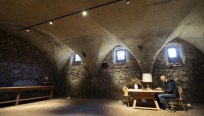
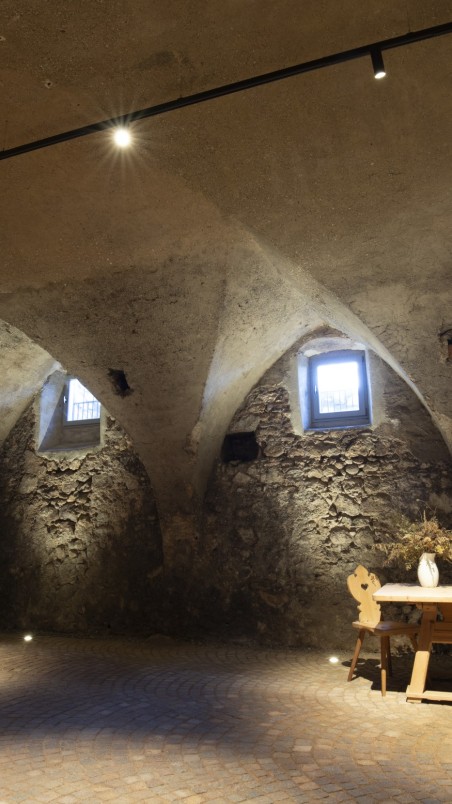
Basements often lack ventilation systems and heating, and are rarely ventilated, either. "As temperature and humidity fluctuate considerably throughout the year, unheated basements are frequently exposed to conditions in which warm, moist air meets cold surfaces," explains Daniel Herrera of Eurac Research. This, he says, increases the risk of surface condensation and mould growth. Herrera is the scientific lead of SMARTAIR, a project focused on unheated, non-residential spaces such as storage cellars and commercial basements. While the direct health risks are generally limited because people do not spend long periods of time in these spaces, mould can nevertheless damage stored objects or goods.
As part of the project, Eurac Research is collaborating with ACCO Solutions, a specialist in wall dehumidification and moisture analysis. Drawing on extensive practical experience, Andreas Pichler recognised that moisture problems in basements are not always caused by rising damp. This insight laid the foundation for a new solution, which has been further developed through the Fusion Grant initiative funded by the South Tyrolean Savings Bank Foundation (Stiftung Südtiroler Sparkasse).
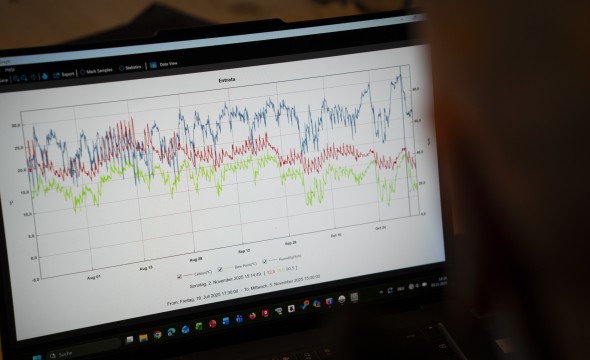
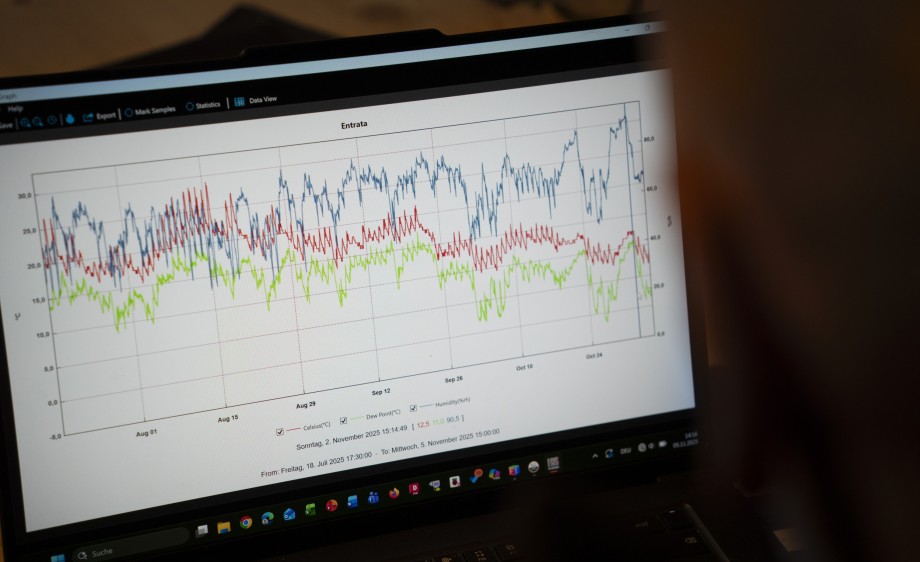
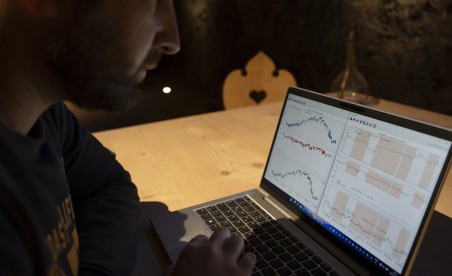
The project is based on precise simulation models calibrated over an extended period using real basements. "These models allow us to learn from real-world conditions and apply those insights to future cases," says Herrera. The long-term objective is to develop transferable models for typical basement types that can be applied across a wide range of buildings.
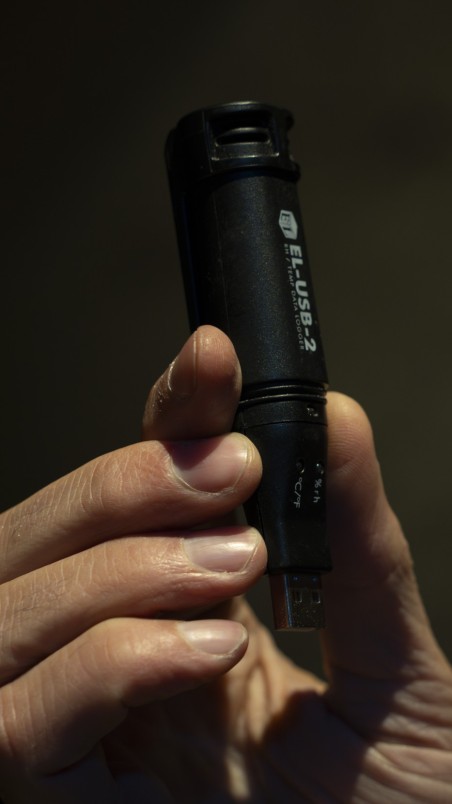
The resulting prototype is a small box containing a control unit and dedicated software. It communicates with sensors that measure temperature and humidity before interacting with various connected devices. An algorithm built into the system determines when ventilation, heating or dehumidification is required. "Using information on both indoor and outdoor temperature and humidity, the system is designed to select the best solution to ensure a suitable indoor climate whilst minimising energy consumption as much as possible," Herrera explains.
At present, SMARTAIR focuses on selected building types and regional climate conditions. Ultimately, however, the aim is to develop a system that operates independently of building type or climate, making it suitable for a much wider range of applications. A continuation of the collaboration with ACCO Solutions is already planned. Herrera believes the project has strong potential to evolve into an industrial or commercial application.
Smart monitoring and artificial intelligence will play a central role in this. "On the one hand, we want to examine how weather forecasts for a specific location can be incorporated into the system; on the other, we want to teach the system how to respond even before weather conditions actually change," Herrera explains.
By combining weather forecasts with the building's virtual model – acting as a kind of “digital twin” – the system could predict how conditions are likely to evolve and make adjustments in advance.
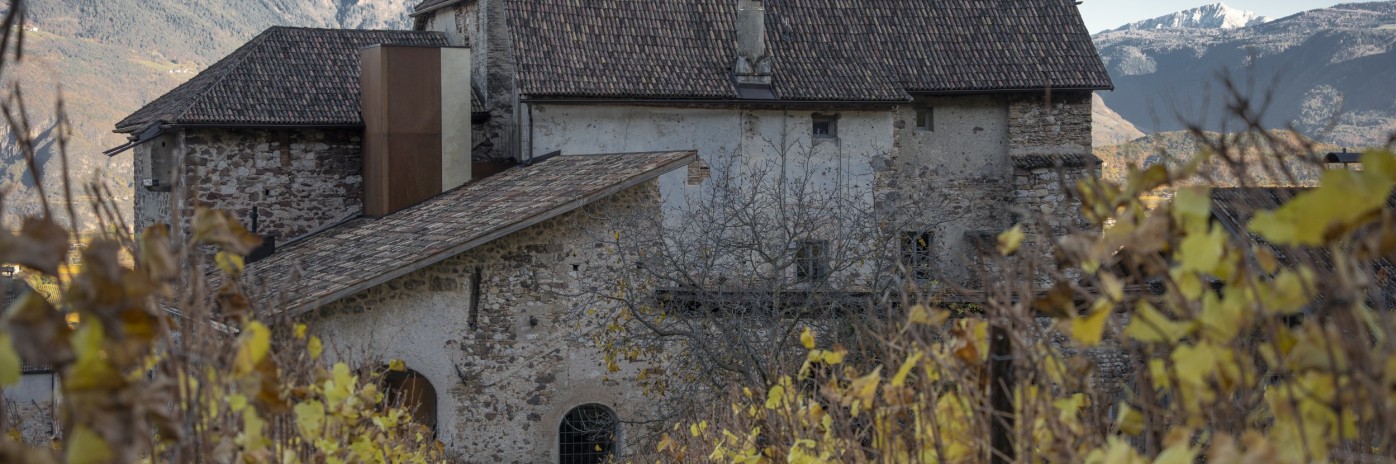
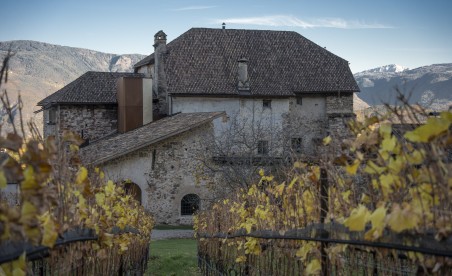
During the ongoing case studies, conducted in a residential building in Bolzano/Bozen and at a winery in Eppan/Appiano, the project received considerable public interest. "We had many people offering their basements for testing," Herrera recalls. For him, this is a clear indication of the project's relevance: "We have identified a genuine problem – and one for which people would be truly grateful if we could provide an effective solution."
SMARTAIR is one of ten projects selected for the third edition of Fusion Grant, an initiative of the Stiftung Südtiroler Sparkasse (the South Tyrolean Savings Bank Foundation) in cooperation with NOI Techpark, the South Tyrolean Business Association and the business network Rete Economia-Wirtschaftsnetz. The initiative actively promotes collaboration between South Tyrolean companies and research institutions, and offers researchers under the age of 40 a pathway into practice-oriented projects.