Published
19.10.2021
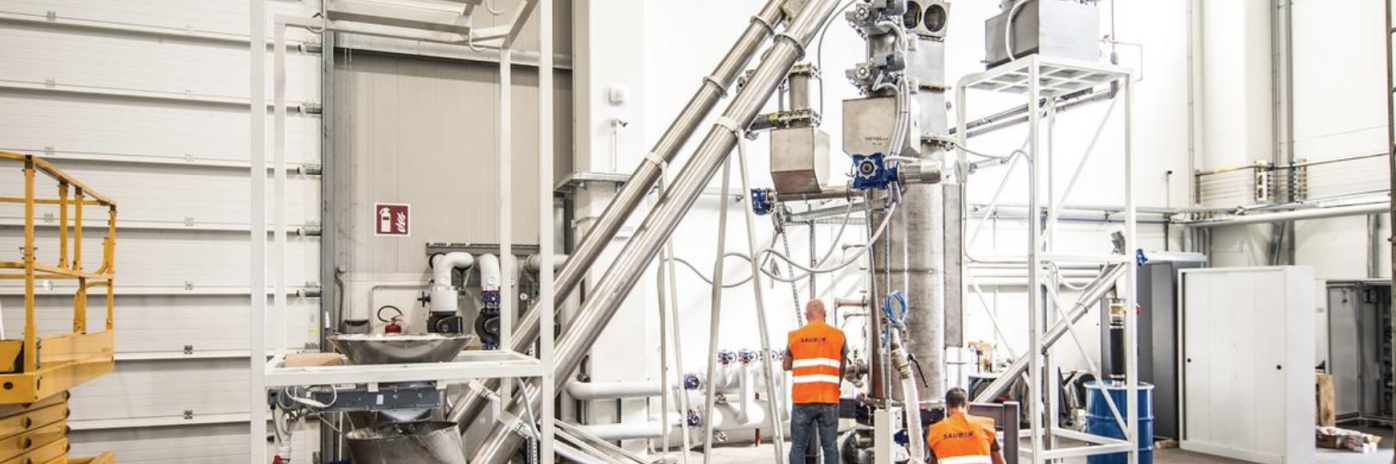
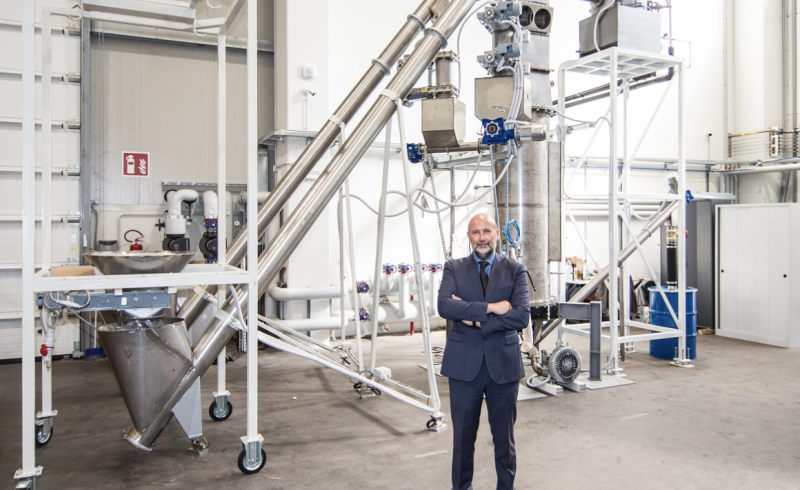
A prototype of the system already existed at the University of Parma. However, it required a technological upgrade, which was successfully accomplished by leveraging the company’s expertise and skills along with a team from the Faculty of Engineering led by Professor Marco Baratieri. “We needed to find a reliable, expert partner to optimise our plant, and we found that here. As a result of this partnership, we have opened a research and development facility in South Tyrol focusing on gasification,” explains Nicola Baraldi, Sauber’s sole director.
How does the new technology work? Waste material is automatically loaded into the plant and feeds the gasification reactor. High temperatures, the presence of air as a gasification agent and pressure cause thermochemical degradation of biomass and production of synthesis gas (syngas). The syngas is then used to produce thermal and electrical energy. In terms of energy, the process is self-sufficient and does not require additional fossil fuels. Furthermore, the poly-generative configuration designed to produce biochar makes the process carbon negative rendering it environmentally sustainable and ideal for the small-scale optimisation of waste biomass.
“The technology developed by Sauber represents a significant advance in the industry and has the potential to be applied in many areas,” explains Stefano Dal Savio, Head of Tech Transfer Green at NOI Techpark, which helped Sauber establish the unibz collaboration, develop the prototype construction project and establish the company’s presence at NOI.
The technology was designed to improve waste management in the agricultural, food and forestry supply chains. One future application field at a local level is sure to be biomass, an area in which several local entrepreneurs are active.
Here you can find out more about this service.