Published
23.05.2023
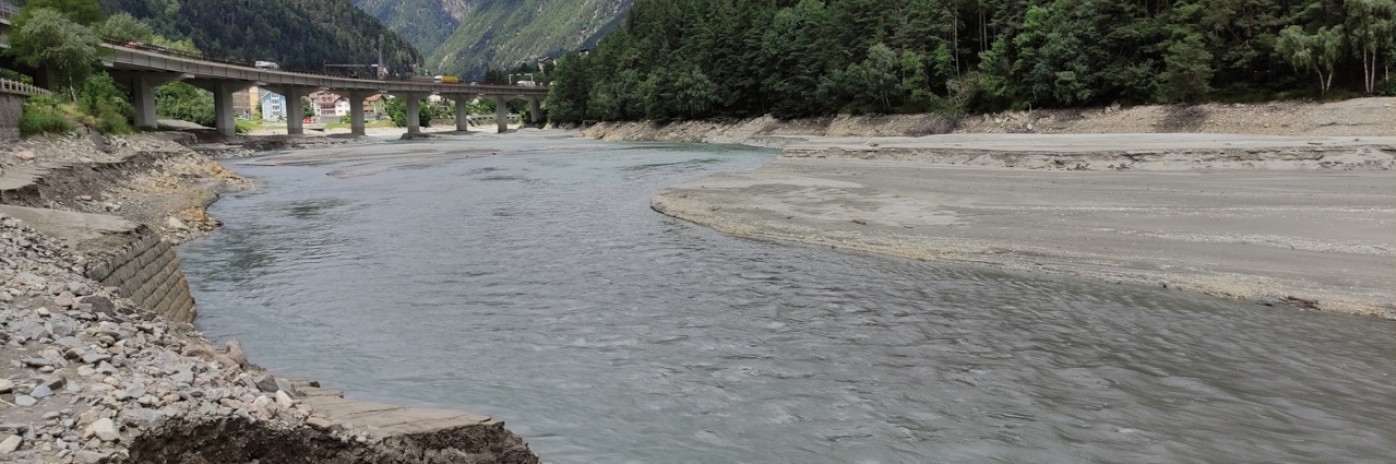
Hydropower is South Tyrol’s most important energy source, with over 90% of the province’s electricity produced by flowing water. Between the 1940s and 1960s, a total of 14 reservoirs were built in South Tyrol between the 1940s and 1960s to ensure that electricity generation could take place regardless of river levels. Extensive work is regularly required to ensure that they remain safe and usable in the long term despite their advanced age. Sediment accumulation is a particular problem for operators, as it can clog the bottom outlets and reduce the capacity of the reservoirs.
The Fusion Grant competition offered an ideal opportunity to address this issue, bringing together science and industry to deliver new insights for the improved management of sediment deposits in Alpine reservoirs. Launched in 2020 by the South Tyrol Savings Bank Foundation and coordinated by NOI Techpark, the initiative is supported by the South Tyrol Economic Circle and Rete Economia – WirtschaftsNetz. It aims to promote sustainable research collaborations and support highly qualified young researchers under the age of 40 through scholarships.
Given its role as South Tyrol’s major energy producer and reservoir operator, it was only natural that Alperia should be involved in a project relating to sediment management in reservoirs. Greek hydrologist Konstantinos Kaffas was recruited as a scientific partner. The Free University of Bozen-Bolzano researcher has many years of experience studying reservoir sedimentation rates and mitigation measures at the bottom of reservoirs. Together with Georg Premstaller, head of the Hydraulics, Environment and Simulation department at Alperia, he set out to investigate sedimentation behaviour in greater detail, using the Franzensfeste reservoir as a case study.
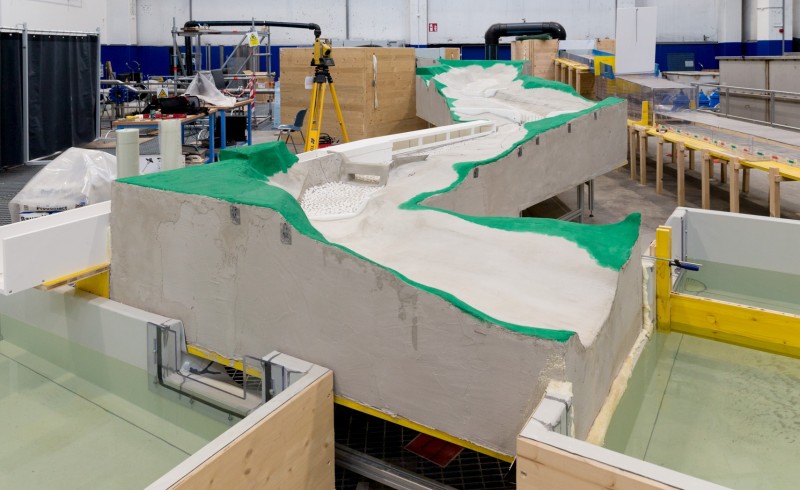
At the Franzensfeste reservoir, for instance, 10 such events were recorded during the 14-month research project. During this period, 200,000 cubic metres of sediment were deposited in the reservoir. Given the reservoir's total capacity of 1.5 million cubic metres, this is a significant amount. The distribution of the sediment was also investigated at the new Thermo Fluid Dynamics Lab at the Free University of Bozen-Bolzano, which is based in the NOI Techpark. Water was passed through a simulated river course and observations were made of how the heavier sediment and lighter suspended matter behaved in the water, as well as how quickly sediment particles of different sizes sank to the bottom.
These observations were then used to calculate the expected sediment inflow into the reservoir. Professor Maurizio Righetti, Head of the Hydraulic Engineering Research Group at the Free University of Bozen-Bolzano and coordinator of the project, considers the fact that this value deviates from the values actually measured on site by only around 7% to be a particular success: “This level of accuracy has not yet been achieved in any comparable research project, and our results can be used to simulate sediment inflow in other reservoirs.”
However, not everything that enters the reservoir remains there permanently. As researcher Konstantinos Kaffas explains, suspended solids are transported further downstream with the water. “Allowing more water than usual to flow out during heavy rainfall or storms is one way to prevent some of the heavier sediment from sinking and thus reducing the amount at the bottom of the reservoir,” the researcher explains, elaborating on one possible application of his findings.
Together with structural measures to facilitate sediment runoff, this would bring Alperia closer to achieving one of the project's important goals: the flushes of the reservoir, which are regularly criticised by aquatic ecologists and fishing enthusiasts as highly damaging, could be carried out more gently and less frequently. If Alperia has its way, research in the field of sediment management will continue beyond the current Fusion Grant project. Premstaller speaks of “research that solves real problems”. This is one of the reasons why the Chair of Hydraulic Engineering was established at the Free University of Bozen-Bolzano 10 years ago.
Companies and research institutions interested in submitting a sustainability-focused project can find more details at: noibz.it/fusion-grant.