Published
03.06.2024
Nowadays, even children know that fruit and vegetables are good for us. However, few people realise that they contain microRNAs that promote health. A Fusion Grant project by Mirnagreen and Laimburg Research Centre aims to harness the power of these amazing molecules.
Research into microRNAs, also known as miRNAs, is a relatively new field. Nevertheless, we already know that molecules extracted from plants can benefit human health due to their antioxidant, antiviral and anti-inflammatory properties. Extracting microRNAs means obtaining healthy substances in their purest form. As a result, it isn’t necessary to eat large quantities of apples to experience their positive effects, and even those who dislike eating spinach can benefit from its properties.
Mirnagreen, which is based at NOI Techpark, has held a patent for extracting microRNAs from plants for several years. “We are the only company in the world to have patented a process of this kind,” states Matteo Faè, production director and head of Biotech Research and Development at Mirnagreen. Now, as part of a Fusion Grant project with Laimburg Research Centre, the aim is to take this process to an industrial scale and study how it can be applied to different plant species. The Fusion Grant call for proposals (organised by Fondazione Cassa di Risparmio di Bolzano in collaboration with NOI Techpark, Economia Alto Adige and Rete Economia) helped the project partners find a talented young researcher to join them.
MicroRNAs for nutrition
The process of extracting and purifying plant molecules has already been developed in previous research projects. One of the most relevant questions now is which plants and, particularly which parts of plants contain the greatest quantity of microRNAs, and how these can be extracted and purified to create healthy foods.
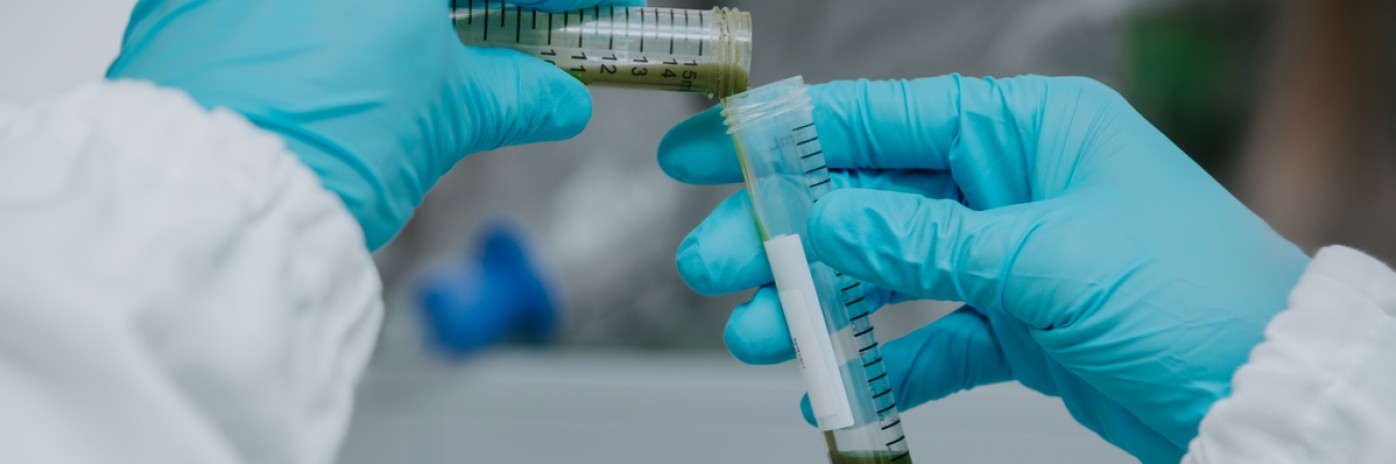
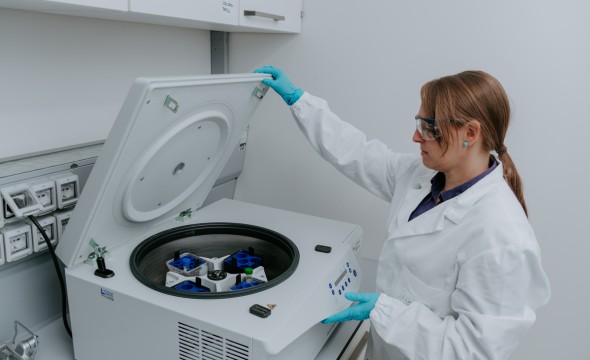
“So far, existing extraction processes have only worked on a small scale and not under the conditions required for food production,” explains Daniela Hey, a researcher at the Laboratory for Flavours and Metabolites at Laimburg Research Centre. “That’s why we wanted to ensure from the beginning that we weren’t using toxic solvents or potentially harmful additives, and the extraction process we developed is therefore compatible with food production,” she continues.
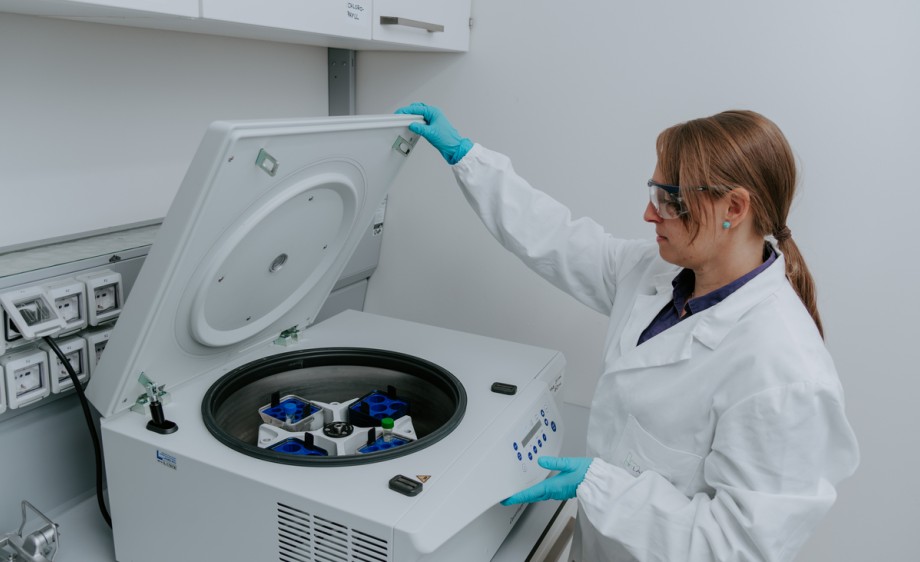
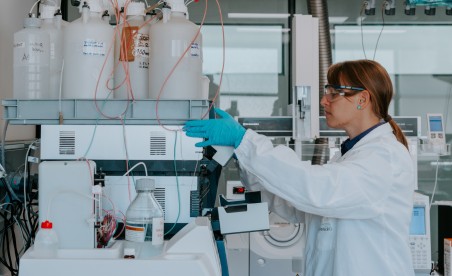
To this end, Hey and her team analysed a wide variety of plants, including rice, spinach, beans, apples and other fruits and vegetables, to determine which contained the highest concentration of microRNAs and and how best to extract and purify them.
Using by-products
By-products are important as microRNAs can be found in all parts of a plant, including the pulp, peel, seeds, stem and leaves. The main goal was therefore to analyse parts of plants that are currently discarded in food processing, thus adding value to the local circular economy, highlights Matteo Faè of Mirnagreen. “By extracting microRNAs, we are giving new value to food waste, such as peel, seeds and stems, produced from fruit and vegetable processing”.
Peter Robatscher, head of the Laboratory for Flavours and Metabolites at Laimburg Research Centre and the project’s scientific coordinator, also highlights the importance of collaboration between industries and research centres, stating “We benefit from Fusion Grant because it enables us to develop projects relevant to South Tyrol’s agriculture and food processing. This wouldn’t be possible as part of our regular work. At the same time, we can offer young scientists exciting opportunities for applied research.”