

Date
17/09/26
Flamenco sin Género(s), curated by Esther Regueira Mauriz, delves into the most audacious expressions of contemporary flamenco. Bringing tradition and the avant-garde into dialogue, the event showcases works that defy genre categorizations and conventional labels, illuminating flamenco as a vibrant, evolving, and critically marginal art form.
At the NOI Techpark in Bolzano, the festival features performances by Rocío Márquez with Himno Vertical, Paula Comitre with Après Vous, Madame, and Los Voluble with Flamenco is not a crime.
Himno Vertical by Rocío Márquez
Himno Vertical arises from the collaboration between Andalusian cantaora Rocío Márquez and guitarist Pedro Rojas Ogáyar. Together, they reimagine the Requiem – traditionally a mass for the dead and a song of final farewell – transforming it into a work that celebrates not just endings, but beginnings, flow and metamorphosis. Moving away from the concept of a closed, single-author work, the project unfolds as a collective choral echo: a ritual that simultaneously bids farewell and welcomes the new, a ceremony that invites us to perceive life and death not as opposing forces but as facets of a single, unbroken movement. On stage, Márquez’s voice and Rojas Ogáyar’s guitar craft an intimate and immersive soundscape, where experimentation, improvisation and creative freedom converge with the deep roots of flamenco jondo, woven together with echoes of both classical and contemporary poetry.
Après Vous, Madame by Paula Comitre
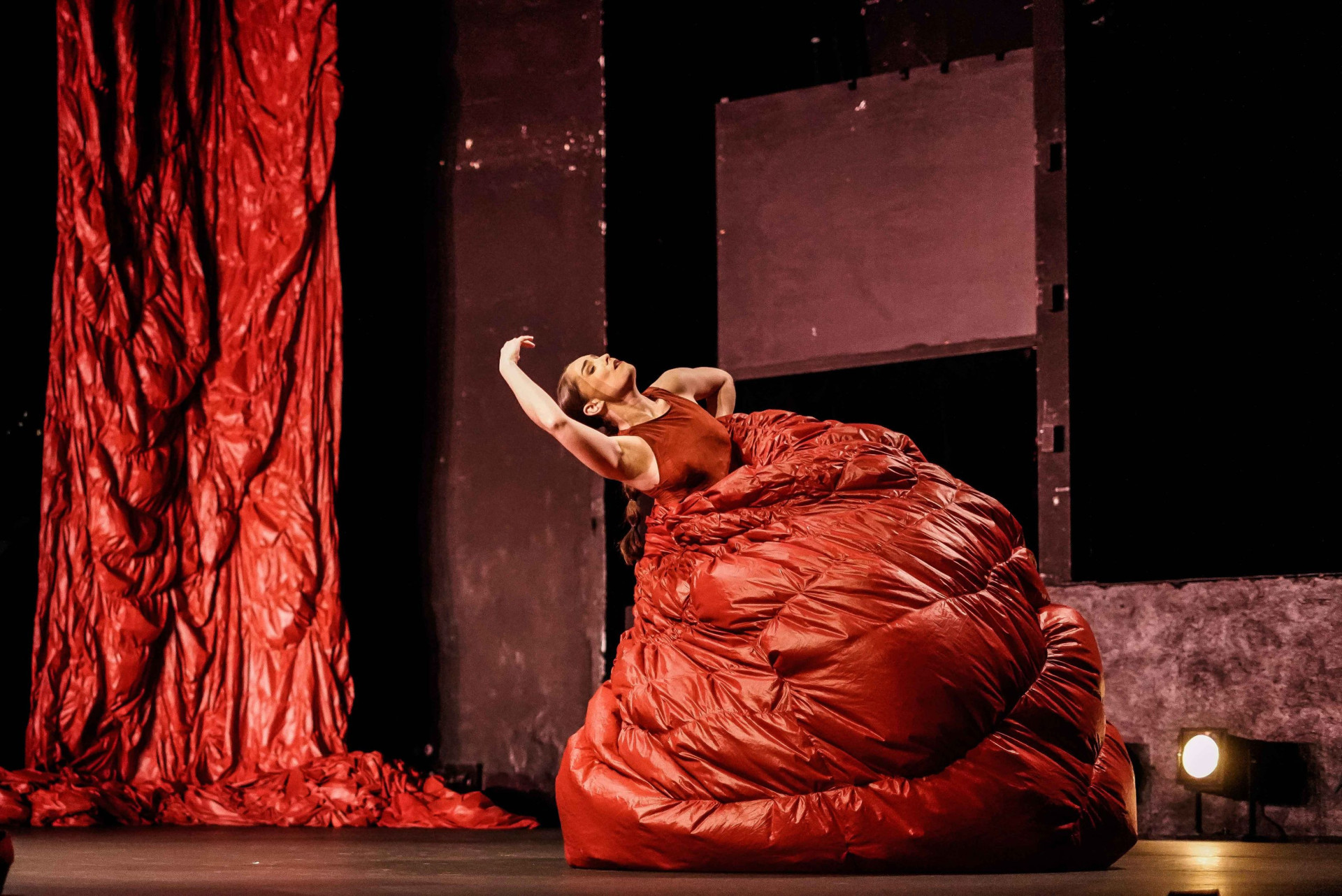
During the 1920s, when Paris pulsed as the vibrant heart of the avant-garde, Antonia Mercé – famously known as ‘La Argentina’ (1890–1936) – radically reshaped flamenco, elevating it to a modern and universal language. It is from this luminous legacy that the project Après vous, madame draws its inspiration. Here, dancer and choreographer Paula Comitre moves beyond mere celebration, choosing instead to question the past through a bold, contemporary lens. Rather than a conventional biographical tribute, the work unfolds as a dynamic dialogue between eras, in which flamenco merges with musical research and visual experimentation. On stage, choreographic movement enters into a conversation with piano compositions and evocative textile installations, carving out a space suspended between historical memory and creative reinvention. The result is a performance of rare intensity: a manifesto to the vitality of an artform that, while deeply rooted in tradition, never ceases to be redefined.
Flamenco is not a crime by Los Voluble
Flamenco is not a crime (2019) is an audiovisual performance by Los Voluble – the duo of brothers Pedro and Benito Jiménez – where flamenco and electronica intersect with critical culture and political video remixing. Drawing inspiration from the ‘free party is not a crime’ movement, the project builds upon the foundations laid in their previous works, Raverdial and En el nombre de, centring on the communal power of the party, the ethics of the remix and the complexities of collective experience. In this proposal, Los Voluble confront flamenco through its most vibrant frictions: the clash between purism and the avant-garde, and the tension between rebellious attitude and technical virtuosity. Through the use of archival footage and live video manipulation, the duo places flamenco in a direct dialogue with global sounds such as Gqom, footwork, experimental dub, grime and reggaeton. By embracing these stylistic leaps, they reclaim flamenco as a fluid, hybrid territory – a project that shatters any archaic notion of purity, revitalising flamenco as a visceral force of the present.
The ticket grants access to all three performances.
WWW.NOI.BZ.IT/SUMMER_AT_NOI

 Whatsapp
  Email
Email  Facebook
  LinkedIn