Published
03.04.2024
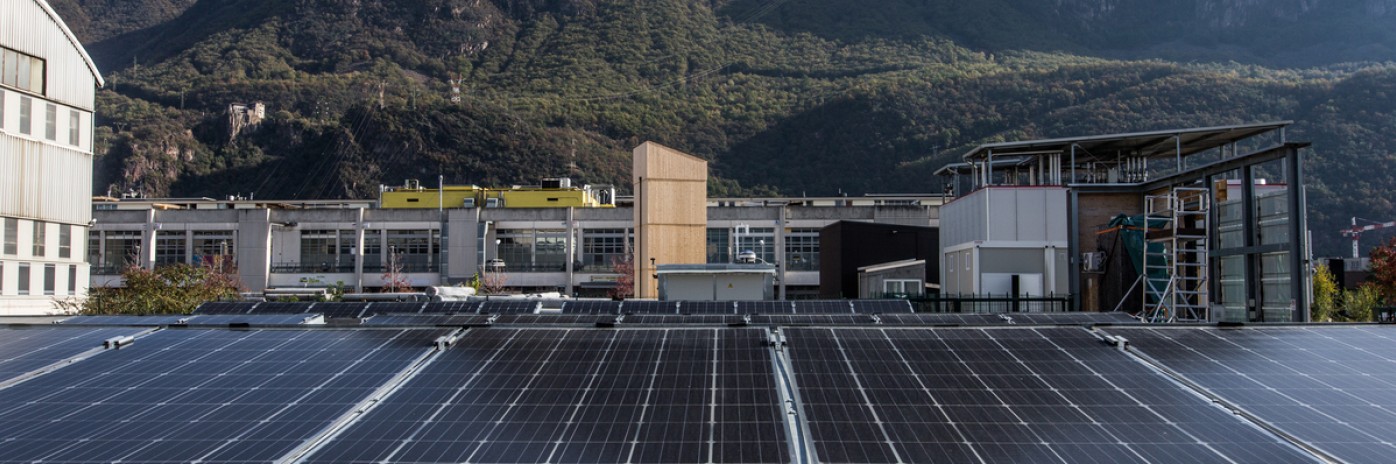
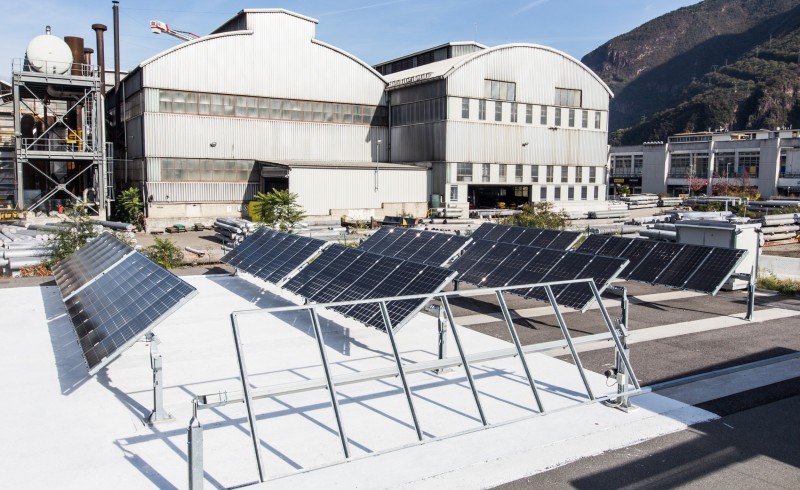
Solar power is on the rise, also in South Tyrol. In 2022 alone, the number of photovoltaic installations in the region increased by around 200% compared to the previous year. While there’s no disputing the opportunities this trend represents, it might also pose a challenge to the power grid if not managed correctly. For this reason, Eurac Research and South Tyrol’s leading electricity distributor, Edyna, have developed the SustainGRID research project. It forms part of the Fusion Grant call for proposals, which supports researchers under the age of 40 and fosters new partnerships between research organisations and businesses. Fusion Grant is promoted by Fondazione Cassa di Risparmio di Bolzano and NOI Techpark (in partnership with Südtiroler Wirtschaftsring-Economia Alto Adige and Rete Economia-Wirtschaftsnetz).
“Currently, the level of photovoltaic penetration does not present problems for the quality of the electricity service or for managing power flow. However, it’s useful to be able to pinpoint what changes might occur in the future, so that adequate adjustments can be made to the grid,” explains engineer Alessandro Donadello, Edyna’s technical director and the project contact. “Storage systems are currently very limited in number and small-scale, but in the future they’ll play a key role in mitigating the variability of solar power production and making it flexible.”
This has led to the idea of creating a modelling and analysis framework that can identify areas of the distribution grid where photovoltaic installations are set to increase the most. The aim is to assess any technical impact and develop possible mitigation solutions. Environmental impacts are also assessed to explore how photovoltaic development helps reduce CO₂ emissions.
While the benefits of photovoltaics for reducing carbon emissions are clear, the project also seeks to evaluate how batteries can be optimally utilised to minimise the variability of photovoltaic production and maximise usage, as emphasised by PhD researcher Azim Heydari from the Institute for Renewable Energy at Eurac Research. Furthermore, the researcher explains that, by conducting a life cycle assessment based on future energy scenarios, he and his colleagues, who are experts in sustainability, are attempting to quantify the environmental impacts of these technologies and propose ways in which they might be recycled.
Azim Heydari came to South Tyrol specifically for the SustainGRID project. Having gained experience at the Department of Mechanical and Aerospace Engineering at La Sapienza University in Rome, with the School of Electrical Engineering and Computer Science at the KTH Royal Institute of Technology in Stockholm, and with the Department of Mechanical Engineering at the University of Alberta in Canada, he is now working on developing the modelling framework.
This is another example of how Fusion Grant attracts (or brings back) talent from around the world to contribute to innovation in South Tyrol.
The Edyna and Eurac Research project clearly demonstrates the importance of collaboration between different areas of expertise in furthering the development of the electricity grid of the future. Integrating photovoltaic systems effectively into the grid improves air quality, reduces the effects of climate change and cuts energy costs.
“We have currently identified the potential of photovoltaics at the primary substation level, and the photovoltaic and battery penetration rates for future energy scenarios that will lead to a reduction in CO₂ emissions of 55% and 100% in 2030 and 2040, respectively. The focus is now on assessing hosting capacity, in other words the grid’s ability to hold such quantities of photovoltaic power without overloading,” explains Grazia Barchi, team leader and senior researcher at the Institute for Renewable Energy in Eurac Research’s Photovoltaic Systems group. She is also the head of scientific coordination for the Fusion Grant project.
“Identifying potential areas with limited hosting capacity is crucial for understanding and appreciating if and when these levels can be reached without making considerable changes to the grid, such as strengthening it and/or introducing advanced controls,” states Edyna engineer Davide Prando, who helped develop the project. He adds: “For Edyna, this project is an opportunity to advance the distributor’s role in smart grids and in an energy system featuring an increasing number of renewable and decentralised resources.”
NOI Techpark contributed to the project by supporting activities and coordinating and monitoring their development. “Taking part in Fusion Grant gave both us and Edyna an opportunity to exchange ideas and develop. Our research team worked closely with the distributor and was therefore able to implement and apply scientific expertise and methodologies to a real-world case study (i.e. the region) in order to support network planning,” concludes Barchi.
Companies that are interested participating in the next Fusion Grant call can find all the necessary information at fusiongrant.info.